Become SWEDISH
SPEAK LIKE A REAL NATIVE
AUTHENTIC SWEDISH LIVING
From its early beginnings as a Viking society in the late 8th century to its rise as a powerful kingdom in the Middle Ages, Sweden has played a pivotal role in European history. Its rich cultural tapestry reflects influences from Norse mythology, medieval trade networks, and centuries of monarchy, blended with deeply rooted Scandinavian traditions. With its stunning architectural heritage, from medieval cathedrals to iconic royal palaces, Sweden offers a timeless journey through its dynamic and enduring cultural legacy.
After the end of the 20th century’s political transformations, Sweden continued to strengthen its role as a modern democracy. The nation embraced progressive reforms, joining the European Union in 1995 and positioning itself as a dynamic player in Northern Europe. Its thriving arts scene, expanding tourism industry, and leadership in education, sustainability, and technology showcase a country that honors its past while shaping a forward-looking future. Today, Sweden is seen as a bridge between tradition and innovation, celebrated for its unique language, cuisine, and spirit of openness.
We have created a selection of words and expressions that you won't find in any textbook or course, to help you become a real native by understanding Swedish words that carry a deeper cultural meaning as well as expanding your knowledge of the country and its history.
Speak and think like a real Swede!


EXPAND YOUR KNOWLEDGE
If you are serious about learning Swedish, we recommend that you download the Complete Swedish Master Course.
You will receive all the information available on the website in a convenient portable digital format as well as additional contents: over 15.000 Vocabulary Words and Useful Phrases, in-depth explanations and exercises for all Grammar Rules, exclusive articles with Cultural Insights that you won't find in any other textbook so you can amaze your Swedish friends thanks to your knowledge of their country and history.
With a one-time purchase you will also hours of Podcasts to Practice your Swedish listening skills as well as Dialogues with Exercises to achieve your own Master Certificate.
Start speaking Swedish today!


ALLEMANSRÄTT
ALLEMANSRÄTT (right of public access) is a unique Swedish legal and cultural tradition that allows everyone to freely access nature, regardless of land ownership. The principle of allemansrätten (the right of everyone) is enshrined in the Swedish constitution and gives people the ability to walk, cycle, ski, camp, and forage in forests, fields, and along lakes and coastlines. It emphasizes both freedom and responsibility, as the phrase often used to explain it is “do not disturb, do not destroy.” This balance highlights the importance of respecting nature while enjoying its benefits.
The roots of allemansrätt go back centuries, when rural communities depended on the land for survival and mobility. Over time, this customary right became formalized and is now a defining feature of Swedish outdoor life. It allows activities such as picking berries, mushrooms, and flowers, provided they are not protected species, and fishing in many lakes and coastal waters. This accessibility has shaped Swedish culture, making outdoor recreation such as hiking, canoeing, and cross-country skiing a natural part of everyday life.
One of the most significant aspects of allemansrätt is its inclusivity. Both Swedish citizens and visitors have the same rights to enjoy nature. This has contributed to Sweden’s reputation as a country with open landscapes and strong environmental values. It also plays a major role in public health, as Swedes regularly engage in outdoor activities thanks to this freedom. The right extends to camping, allowing people to set up tents for one or two nights in most areas, as long as they avoid private gardens, farmland, or areas that might be damaged.
However, allemansrätt also carries legal responsibilities. For example, fires may only be lit in safe conditions, littering is strictly forbidden, and disturbing wildlife is not permitted. Landowners must tolerate people crossing their land, but visitors must respect crops, animals, and fences. This mutual respect ensures the survival of the system and is an important example of how law and culture intertwine in Sweden.
In modern times, allemansrätt is also a point of pride and a central theme in Swedish tourism campaigns, as it sets the country apart from many others in Europe where access to nature is more restricted. It symbolizes democratic access to the environment, a collective cultural value, and a sustainable approach to using natural resources. For Swedes, allemansrätt is more than a legal principle; it is a way of life that defines the relationship between people and nature.


ASTRID LINDGREN
ASTRID LINDGREN is one of the most celebrated Swedish authors of the 20th century, known worldwide for her children’s literature. Born in 1907 in Vimmerby, she became famous for creating enduring characters such as Pippi Långstrump (Pippi Longstocking), Emil i Lönneberga (Emil of Lönneberga), and Karlsson på taket (Karlsson on the Roof). Her works have been translated into more than 100 languages and have sold over 165 million copies, making Astrid Lindgren a cornerstone of Sweden’s cultural exports.
The most famous character, Pippi Longstocking, introduced in 1945, challenged traditional views of childhood with her independence, strength, and playful disregard for authority. This unconventional figure made Astrid Lindgren a pioneer in children’s literature, presenting young readers with empowering and imaginative stories. Beyond Pippi, her books often combined humor with moral questions, addressing themes such as fairness, friendship, and the importance of standing up for what is right.
Astrid also used her writing to highlight Swedish rural traditions and landscapes. Settings like Småland, where she grew up, became the backdrop for stories about family life, farm culture, and the experiences of childhood in Sweden. Her vivid depictions introduced international readers to Swedish life and values, shaping global perceptions of the country. In this sense, she became not only a storyteller but also a cultural ambassador.
Her influence extended into social issues. Astrid was outspoken on topics such as children’s rights, animal welfare, and environmental protection. Her 1976 speech “Never Violence” was influential in the debate that led Sweden to become the first country in the world to ban corporal punishment of children. She also advocated for animal rights, contributing to reforms in animal protection laws in Sweden. Her ability to use literature and her public voice for social impact shows how she transcended the role of author to become a moral authority in Swedish society.
The legacy of Astrid Lindgren is preserved in institutions such as Astrid Lindgrens Värld (Astrid Lindgren’s World), a theme park in Vimmerby dedicated to her characters and stories. The Astrid Lindgren Memorial Award, one of the most prestigious international prizes for children’s literature, was established by the Swedish government in her honor. Through her writing and activism, she shaped both national identity and international views of Sweden. Today, she is remembered not just as a children’s author, but as a global cultural figure whose stories and values continue to inspire new generations.
BLÅBÄRSSOPPA
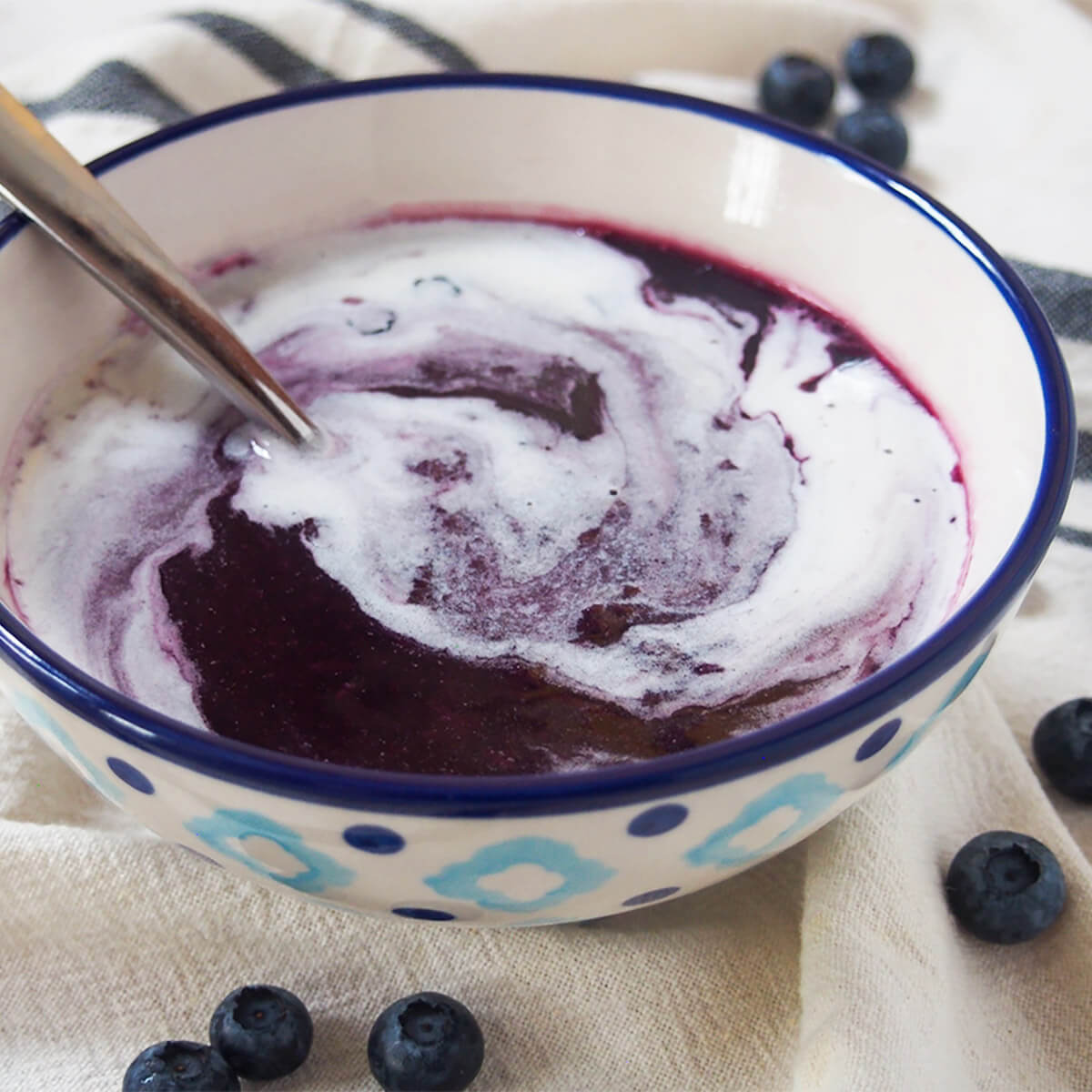
BLÅBÄRSSOPPA (blueberry soup) is a traditional Swedish dish that holds both cultural and practical importance. Made from bilberries, which are native to Sweden and richer in flavor than cultivated blueberries, blåbärssoppa is typically prepared by cooking the berries with water, sugar, and potato starch to thicken the mixture. It can be served hot or cold, depending on the season, and is enjoyed either as a drink or as a light meal. Its rich flavor and high nutritional content make it a staple of Swedish cuisine, particularly during the colder months.
One of the most well-known associations with blåbärssoppa) is the Vasaloppet (Vasa ski race), the world’s oldest and longest cross-country ski race held annually in Dalarna. For decades, participants in the 90-kilometer race have been served warm blåbärssoppa at designated stations along the course. This tradition has made the soup an essential part of Sweden’s sporting and cultural heritage, symbolizing nourishment, endurance, and national identity. The drink provides quick energy, hydration, and comfort to skiers braving the long-distance race, reinforcing its reputation as both practical and symbolic.
Beyond sports, blåbärssoppa is also commonly served at home and in schools, often accompanied by crispbread or small biscuits. Its simplicity, affordability, and use of locally available berries have made it a favorite across generations. For many Swedes, it evokes memories of childhood, winter activities, and shared meals with family. The popularity of blåbärssoppa highlights the Swedish cultural connection to forest resources, as berry picking remains a cherished pastime supported by allemansrätt (right of public access), which allows anyone to forage in the wild.
Commercially, ready-to-drink cartons of blåbärssoppa are widely available in Swedish supermarkets and are particularly popular during winter. Brands like Ekströms have become synonymous with the product, ensuring that this traditional dish is both convenient and accessible. It is also occasionally served in hospitals due to its gentle texture and nutritional qualities, showing its place not only in culture but also in Swedish health practices.
The significance of blåbärssoppa lies in its combination of tradition, nutrition, and cultural symbolism. It embodies the Swedish approach to food that is practical, closely tied to nature, and deeply integrated into everyday life as well as national events. Whether enjoyed during the Vasaloppet (Vasa ski race) or at the family table, blåbärssoppa remains an enduring symbol of Swedish culinary identity.
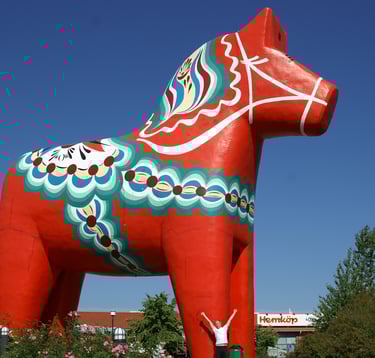
DALAHÄST
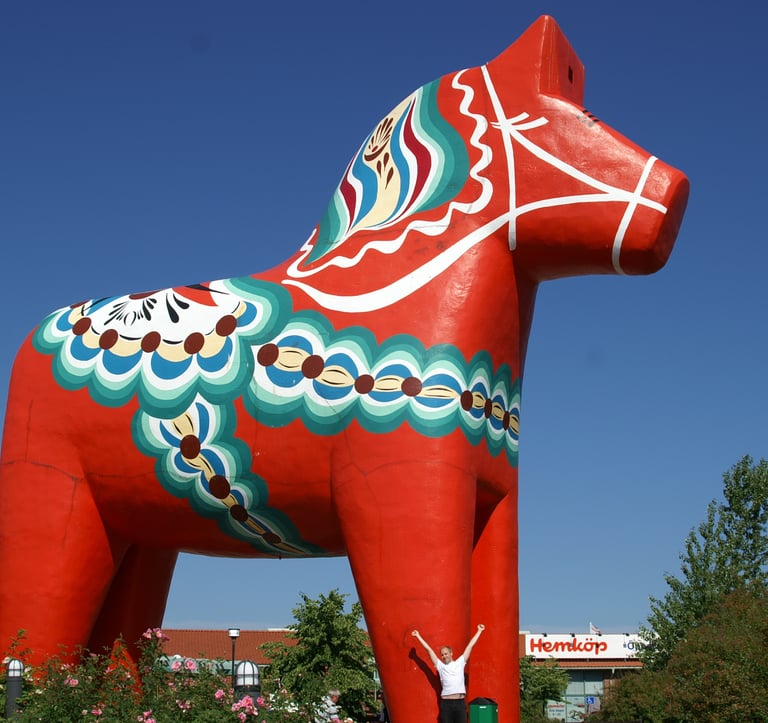
DALAHÄST (Dala horse) is one of the most recognizable symbols of Sweden and has become an important part of the country’s cultural identity. Originating from the province of Dalarna, the Dala horse is a hand-carved wooden horse traditionally painted in bright colors, most famously red with decorative patterns in white, green, yellow, and blue. The carving of wooden horses in Dalarna dates back to at least the 17th century, when they were crafted by men working in the forests during long winters and later sold or given as toys to children. Over time, the craft developed into a national symbol representing Swedish folk art.
The significance of the Dala horse lies in its transformation from a simple children’s toy to a cultural emblem. The most famous style comes from the village of Nusnäs in Mora, where the tradition of painting horses with the distinctive “kurbits” floral patterns took hold. The production process involves hand-carving the horse from pine wood, sanding it smooth, and then painting it with layers of vibrant colors. Each piece is unique, reflecting the artisan’s skill, and the horse has become a symbol of Swedish craftsmanship, tradition, and rural heritage.
The Dala horse gained international recognition at the 1939 World’s Fair in New York, where a giant painted horse was displayed at the Swedish pavilion. This exhibition introduced the symbol to the global stage, and since then, the horse has been exported widely as a souvenir representing Sweden. Today, miniature Dalahästar (Dala horses) are sold in gift shops across the country and are often presented as official gifts to foreign dignitaries, cementing their status as a national icon.
In Sweden, the Dala horse continues to play a role in everyday cultural life. It appears in home decorations, logos, and cultural events, often symbolizing Swedish identity and tradition. The horse is also associated with Midsommar (Midsummer), folk festivals, and regional pride in Dalarna. Local workshops in Nusnäs still produce authentic Dala horses, attracting visitors who can observe the carving and painting process, ensuring the continuation of this craft.
The enduring popularity of the Dala horse illustrates how a regional craft can evolve into a global symbol of national culture. Its presence in both Swedish households and international gift exchanges highlights its role as a unifying emblem of Sweden’s heritage, craftsmanship, and design. Through its history, craftsmanship, and symbolism, the Dala horse remains one of the strongest cultural icons representing Sweden.
DROTTNINGHOLM
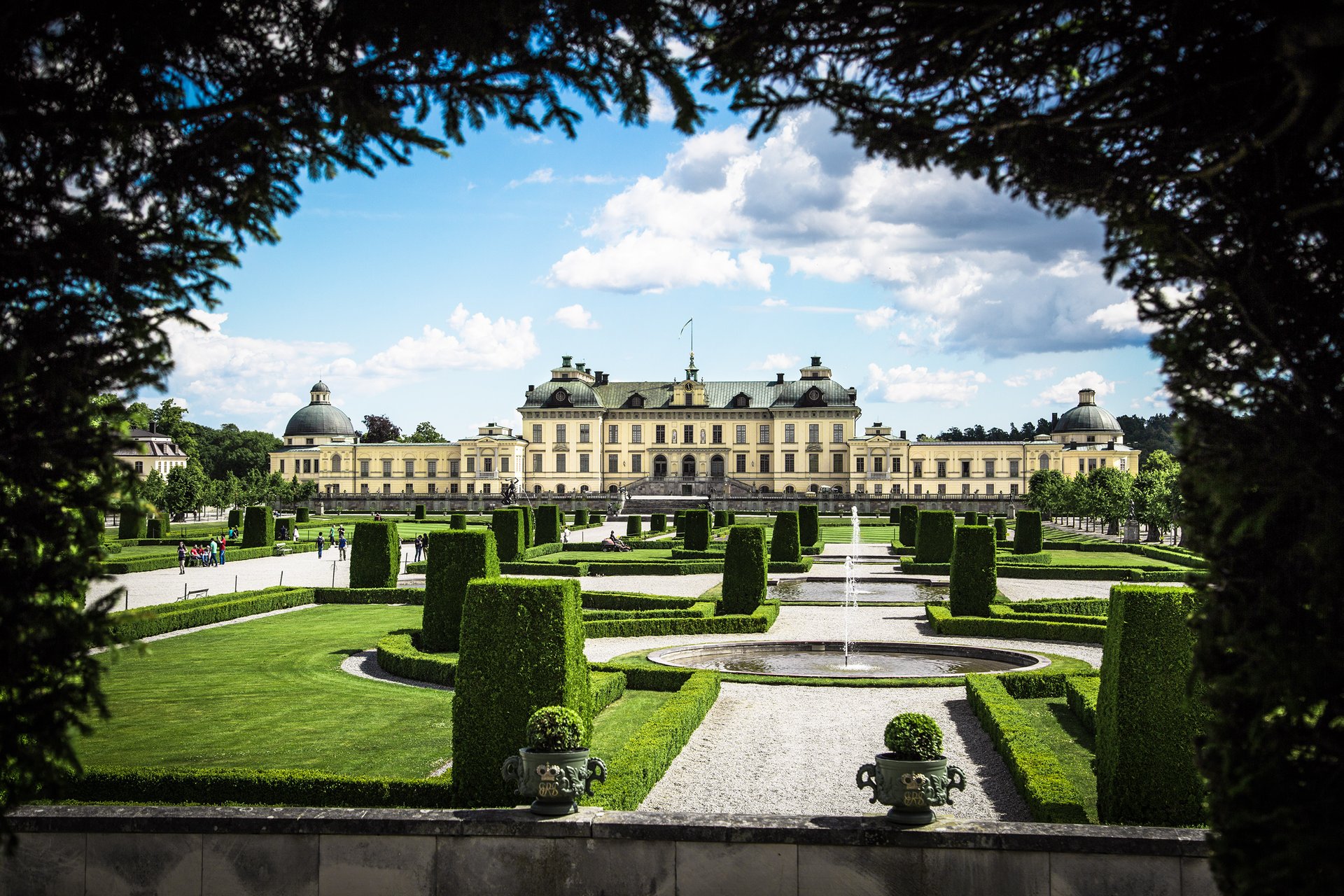
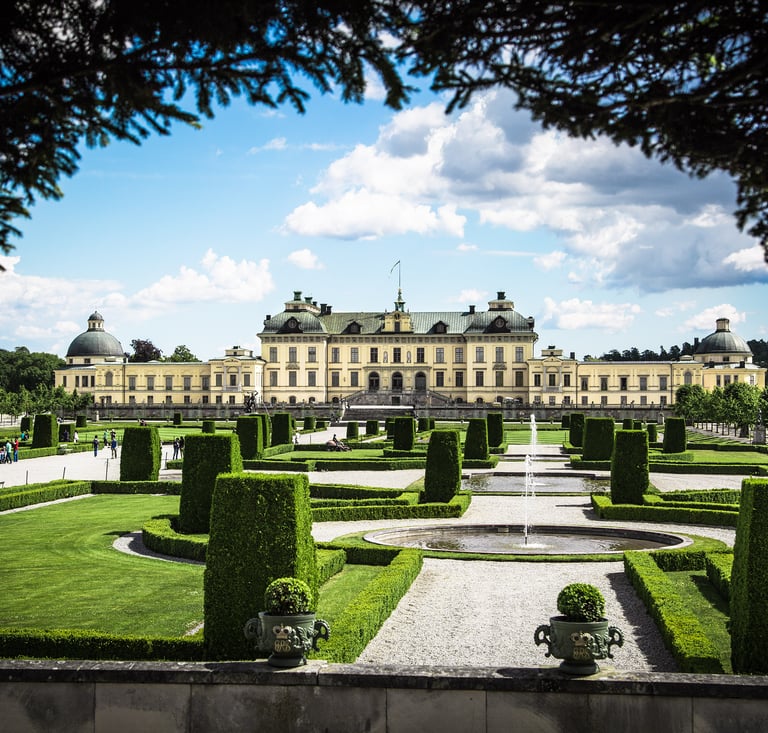
DROTTNINGHOLM (Drottningholm Palace) is one of Sweden’s most important cultural landmarks and serves as the private residence of the Swedish royal family. Located on the island of Lovön in Lake Mälaren, just outside Stockholm, Drottningholm Palace was originally built in the late 16th century but took its current Baroque form in the 17th century under Queen Hedvig Eleonora. The palace complex, which includes extensive gardens, a theater, and a Chinese pavilion, is often compared to Versailles in France for its grandeur and historical significance. Since 1991, Drottningholm Palace has been a UNESCO World Heritage Site, recognized for its outstanding preservation and cultural value.
One of the most notable features of Drottningholm Palace is the Drottningholms slottsteater (Drottningholm Palace Theatre), built in 1766. It is one of the world’s best-preserved 18th-century theaters and still uses original stage machinery, allowing audiences to experience operas and plays much as they were staged during the Enlightenment. This makes the theater not only a historical monument but also a living cultural institution, continuing Sweden’s long tradition of theater and music.
Another significant part of Drottningholm Palace is the Kina slott (Chinese Pavilion), a Rococo-style building gifted to Queen Lovisa Ulrika in 1753. This pavilion reflects the 18th-century European fascination with Chinese art and design, blending Swedish craftsmanship with Asian-inspired aesthetics. It is a rare example of how Sweden engaged in global cultural exchange during the period and remains a major attraction within the palace grounds.
The gardens of Drottningholm Palace are also culturally significant. Designed in Baroque and later English landscape styles, they reflect European trends in royal landscaping while showcasing Swedish adaptations. The gardens are open to the public, reinforcing Sweden’s tradition of accessibility to cultural heritage. The contrast between formal avenues, ornamental waterworks, and natural landscapes demonstrates centuries of evolving design and taste.
Today, Drottningholm Palace functions both as a royal residence and as a public heritage site. While parts of the palace are closed to visitors due to its status as the home of King Carl XVI Gustaf and Queen Silvia, large areas remain open, including the gardens, theater, and pavilion. This dual role highlights the Swedish approach to monarchy, where tradition coexists with public transparency.
The significance of Drottningholm Palace lies in its ability to embody Swedish royal history, architectural achievement, and cultural continuity. It stands as a national treasure and an internationally recognized heritage site, symbolizing both Sweden’s historical ties to European court culture and its enduring traditions of preservation and public access.


FALUKORV
FALUKORV (Falu sausage) is one of Sweden’s most iconic food products and a staple of traditional husmanskost (home cooking). This large, ring-shaped sausage is made from a mixture of beef or pork, potato starch, salt, and mild spices, and is often covered in a red casing. The origins of falukorv trace back to the copper mining town of Falun in Dalarna during the 16th and 17th centuries. German miners working in the Falu koppargruva (Falun copper mine) introduced sausage-making techniques as a way to preserve meat for long periods, and over time, this developed into the modern version of falukorv.
By the 19th century, falukorv had become a popular food across Sweden due to its affordability, durability, and nutritional value. It was recognized in 1973 with a protected designation, meaning only sausages meeting specific recipes and quality standards can be labeled as falukorv. This protection underlines its importance in Swedish culinary heritage and guarantees consumers a product rooted in tradition.
In Swedish households, falukorv is prepared in many ways. One of the most common dishes is stekt falukorv med makaroner (fried Falu sausage with macaroni), a simple but beloved family meal. Another variation is ugnspannkaka med falukorv (oven pancake with Falu sausage) or the classic falukorv i ugn (Falu sausage baked in the oven), often sliced, stuffed with mustard, cheese, or onion, and served with mashed potatoes. These dishes exemplify the role of falukorv as comfort food deeply integrated into everyday life.
The cultural symbolism of falukorv extends beyond the kitchen. It is frequently referenced in Swedish media, school canteens, and even political discussions as a marker of ordinary Swedish identity. Because it is inexpensive and widely available, it has become associated with family life, children’s meals, and a shared national food tradition. Its status as a practical and familiar dish has made it a unifying symbol of Swedish cuisine.
Internationally, falukorv is less well-known than köttbullar (meatballs), but within Sweden it carries similar cultural weight. It reflects the Swedish ability to adapt practical solutions—such as preserving meat for miners—into long-lasting culinary traditions. Today, despite changing food habits and the rise of international cuisines, falukorv remains a standard product in Swedish supermarkets and a fixture in national cooking. It represents the intersection of history, industry, and everyday culture in Sweden’s food heritage.
FIKA
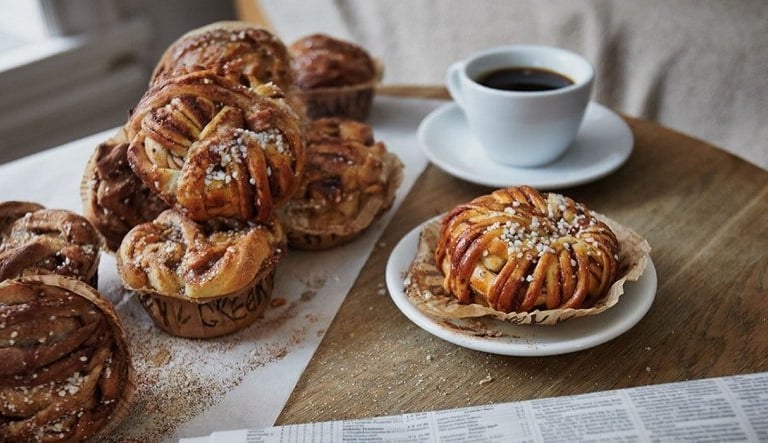
FIKA (coffee break) is one of the most distinctive social traditions in Sweden and is considered a cornerstone of everyday life. The word fika refers not only to drinking coffee but also to the act of pausing during the day to relax, converse, and often enjoy something sweet. Unlike a quick coffee to-go, fika is about taking time to connect with others, whether at work, at home, or in cafés. It is both a cultural practice and a social institution that reflects Swedish values of balance, community, and well-being.
The origins of fika can be traced to the 18th century, when coffee was first introduced to Sweden. Initially controversial, coffee became widely popular in the 19th century, and the tradition of pairing it with baked goods developed. Over time, fika evolved into an established ritual observed across society. Today, it is common for workplaces to schedule official fikapauser (fika breaks), allowing employees to gather for coffee and pastries as part of the daily routine.
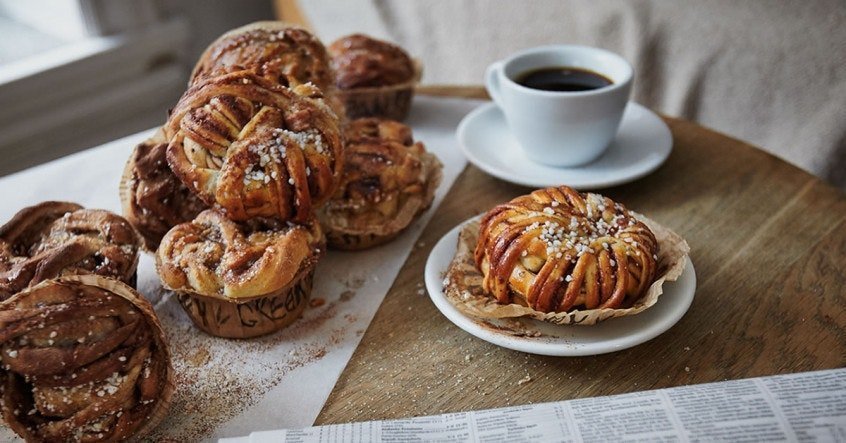
A typical fika involves brewed coffee, though tea or other beverages can also be included, along with pastries such as kanelbulle (cinnamon bun), semla (cream bun), or cookies. The kanelbulle (cinnamon bun) is especially associated with fika and has even been given its own national day, Kanelbullens dag (Cinnamon Bun Day), celebrated on October 4. These sweet accompaniments underline the social and indulgent aspect of the tradition, distinguishing fika from an ordinary meal.
The role of fika in the workplace is particularly significant. It fosters communication between colleagues, encourages informal discussions, and supports team cohesion. Rather than being seen as lost productivity, fika is valued for improving collaboration and creating a positive work environment. This cultural approach reflects Swedish emphasis on equality and collective well-being.
Beyond work, fika is a central part of Swedish social life. Friends and families meet in cafés or at home specifically for fika, making it an occasion to catch up and maintain relationships. The word itself has even become a verb, as in “ska vi fika?” (shall we have a coffee break?), highlighting its integration into everyday speech and practice.
Internationally, fika has gained recognition as an example of Swedish lifestyle philosophy, similar to the Danish concept of hygge. It represents more than just coffee drinking; it symbolizes a pause in the day that prioritizes human connection and well-being. Through its combination of routine, indulgence, and social bonding, fika remains a defining feature of Swedish culture.
GAMLA STAN
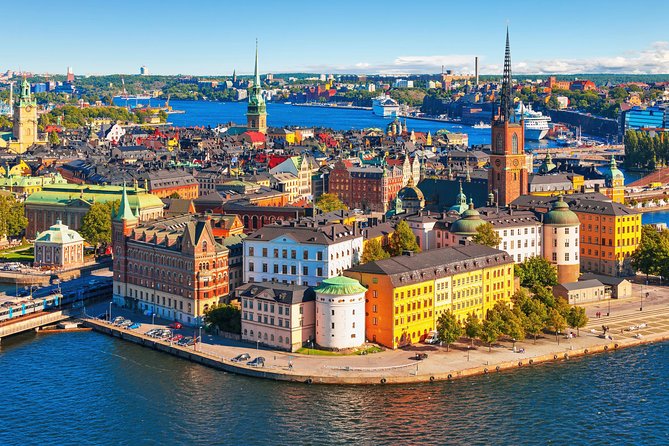
GAMLA STAN (Old Town) is the historic center of Stockholm and one of the best-preserved medieval city districts in Europe. Founded in the 13th century, the Old Town is where Stockholm itself was established, and it remains a key cultural and historical landmark. The area is characterized by narrow cobblestone streets, colorful buildings in shades of ochre and red, and significant architectural monuments that reflect centuries of Swedish history. Today, the Old Town is both a tourist attraction and a living neighborhood, blending residential life, government institutions, and cultural heritage.
At the heart of Gamla Stan (Old Town) is Stortorget (the Great Square), the oldest square in Stockholm, surrounded by historic merchants’ houses and notable for its role in events such as the Stockholms blodbad (Stockholm Bloodbath) of 1520. Nearby stands the Kungliga slottet (Royal Palace), one of the largest palaces in Europe, still used for official ceremonies and housing museums such as the Skattkammaren (Treasury) and Livrustkammaren (Royal Armoury). Another important site within the Old Town is Storkyrkan (the Great Church), Stockholm’s medieval cathedral, where royal weddings and coronations have taken place for centuries.
The charm of the Old Town also lies in its labyrinth of alleyways, small squares, and historic houses. Streets like Västerlånggatan (West Long Street) and Österlånggatan (East Long Street) were once bustling trade routes and today are filled with shops, cafés, and restaurants. The area reflects Stockholm’s development as a Hanseatic trading city, with influences visible in the architecture and layout. Many of the buildings date from the 17th and 18th centuries, though the district still retains its medieval character.
Culturally, the Old Town serves as a center for Swedish identity. It houses the Svenska Akademien (Swedish Academy), responsible for awarding the Nobel Prize in Literature, located in the historic Börshuset (Stock Exchange Building). The presence of these institutions highlights how the Old Town continues to play a role in Sweden’s cultural and intellectual life, beyond its historical importance.
For visitors, the Old Town is one of Stockholm’s most popular attractions, offering museums, guided tours, and seasonal events such as Christmas markets. Despite its popularity with tourists, it remains a residential area where people live and work, maintaining a balance between preservation and modern life.
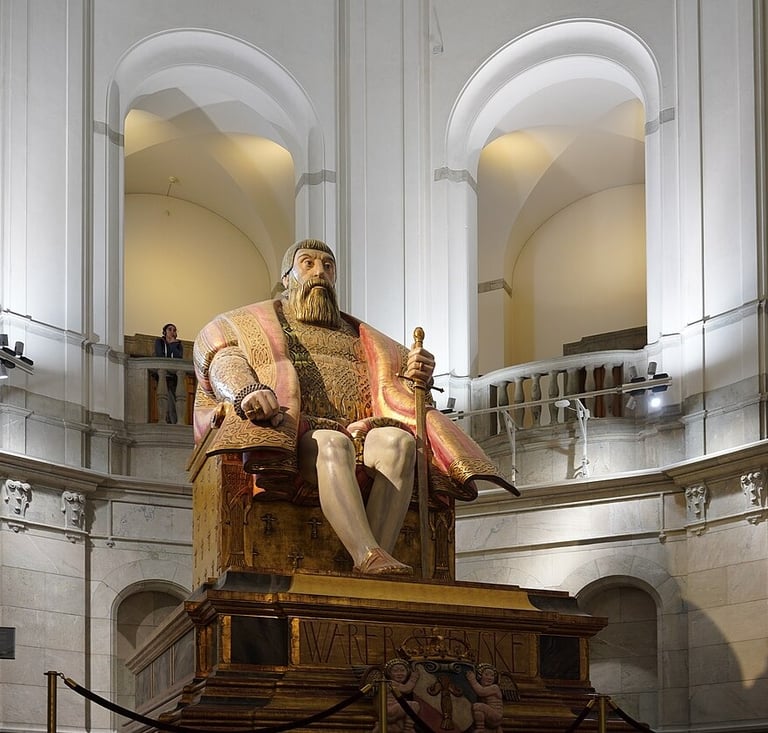
GUSTAV VASA
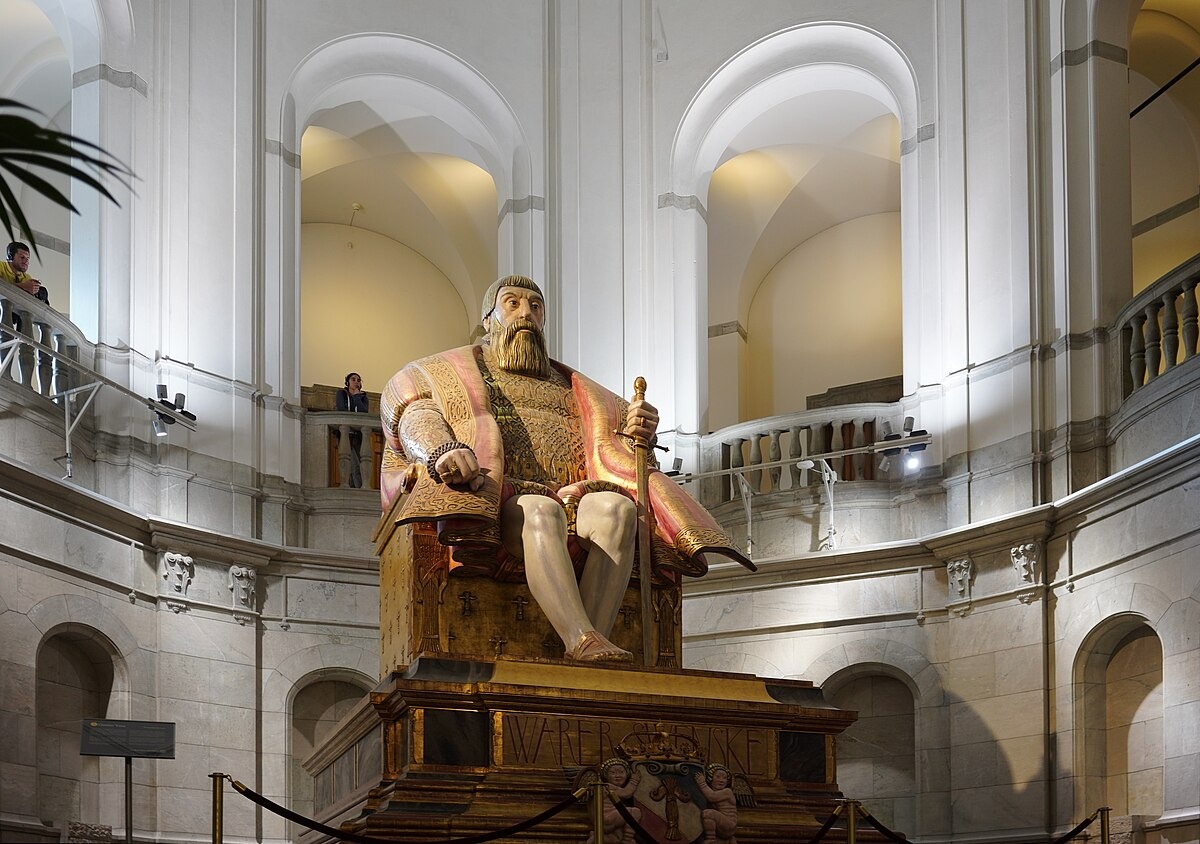
GUSTAV VASA is often regarded as the founder of modern Sweden, ruling as king from 1523 to 1560. His reign marked the end of the Kalmarunionen (Kalmar Union), a political union of Denmark, Norway, and Sweden, and established Sweden as an independent kingdom. Through military leadership and political maneuvering, Gustav Vasa led the Swedish uprising against Danish rule, culminating in his election as king in 1523. This event is considered a turning point in Swedish history and the beginning of Sweden’s transformation into a centralized state.
One of the most significant reforms of Gustav Vasa was the introduction of the Reformation in Sweden. By breaking ties with the Catholic Church and aligning with Lutheranism, he transferred church wealth and power to the crown. This not only strengthened royal authority but also gave Sweden greater independence in religious and political matters. The establishment of a Lutheran state church under Gustav Vasa laid the foundation for centuries of Swedish religious and cultural life.
Economically, Gustav Vasa reorganized taxation and land ownership, increasing state revenues and consolidating his control over the nobility and peasantry. His policies ensured that resources such as grain and iron were directed toward the crown, stabilizing Sweden’s economy and enabling the state to fund its institutions and military. These reforms helped establish a more efficient administration that contributed to Sweden’s rise as a regional power.
Culturally, Gustav Vasa became a symbol of Swedish unity and independence. He is celebrated in national history as a liberator who freed the country from foreign domination. This image has been reinforced through traditions such as the Vasaloppet (Vasa Race), the world’s oldest and longest cross-country ski race, held annually in Dalarna to commemorate his legendary escape on skis during the uprising. The race has become not only a sporting event but also a cultural celebration of Swedish resilience and heritage.
In addition, Gustav Vasa strengthened Stockholm as the capital, centralizing political power and laying the groundwork for its development into Sweden’s leading city. His reign also saw efforts to improve military defenses and expand Swedish influence in the Baltic region, setting the stage for the later rise of Sweden as a major European power in the 17th century.
The legacy of Gustav Vasa is still visible in Swedish identity today. He is remembered as a unifier, a reformer, and a symbol of independence. His dynasty, the Vasaätten (House of Vasa), continued to rule Sweden and Poland, leaving a lasting mark on Northern European history. Statues, monuments, and historical narratives continue to honor his role in shaping the Swedish nation.
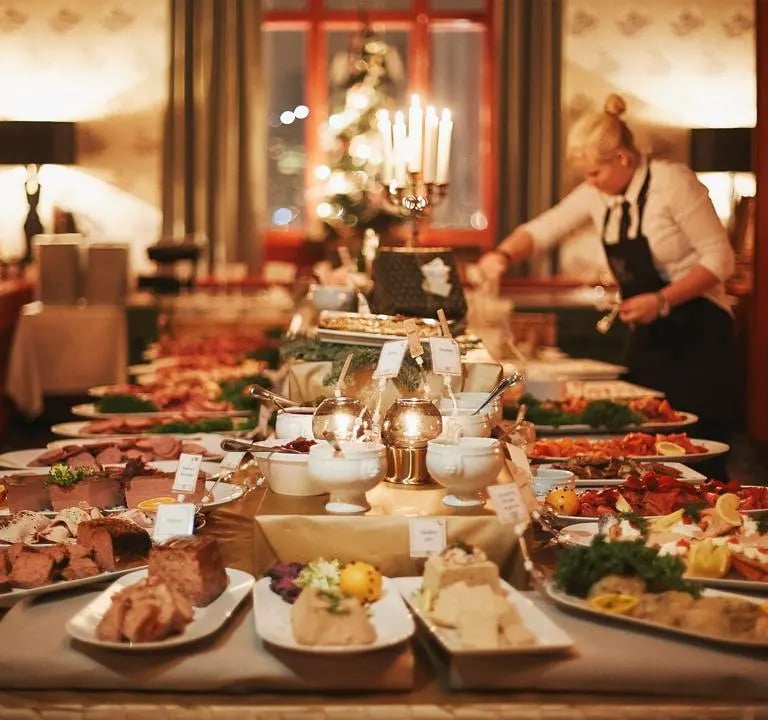
JULBORD
JULBORD (Christmas buffet) is a central feature of Swedish holiday traditions, consisting of a festive spread of dishes served throughout December, particularly on Christmas Eve. The word combines jul (Christmas) and bord (table), reflecting the abundance of foods offered. A typical julbord (Christmas buffet) includes several courses arranged in a specific order, showcasing the diversity of Swedish cuisine and its deep ties to seasonal and historical practices.
The julbord usually begins with a selection of cold dishes. These include sill (pickled herring) prepared in various flavors such as mustard, onion, or dill, and gravad lax (cured salmon) served with hovmästarsås (mustard-dill sauce). Cold cuts like julskinka (Christmas ham), often glazed with mustard, and prinskorv (small sausages) are also staples. The second part of the meal features warm dishes such as köttbullar (meatballs), janssons frestelse (Jansson’s temptation, a potato and anchovy casserole), and revbensspjäll (spare ribs). Finally, desserts include risgrynsgröt (rice pudding), traditionally eaten with cinnamon, sugar, and a hidden almond, as well as cookies, pastries, and knäck (Christmas toffee).
The cultural significance of the julbord lies not only in the food itself but also in the ritual of gathering. Families, friends, and colleagues come together to share the meal, making it a social as well as a culinary event. Many workplaces organize a company julbord, often held at restaurants or hotels, where employees celebrate the season together. This tradition reflects Swedish values of community, equality, and shared experiences.
The origins of the julbord trace back to older smörgåsbord (buffet table) traditions and pre-Christian midwinter feasts, where preserved foods like pickled fish and smoked meats were essential for surviving the winter. Over time, these dishes became associated with Christmas, and the julbord evolved into a codified tradition. While the core elements remain consistent, regional variations exist, with certain areas favoring local specialties.
Modern julbord has also adapted to contemporary tastes. Vegetarian and vegan options are increasingly common, and international influences have added new flavors. However, the symbolic dishes—such as julskinka (Christmas ham), sill (pickled herring), and risgrynsgröt (rice pudding)—remain essential, anchoring the tradition in history. Alcoholic beverages like glögg (mulled wine) and snaps (flavored schnapps) are also typically enjoyed, accompanied by traditional drinking songs known as snapsvisor (schnapps songs).
In summary, the julbord is more than a meal; it is a ritual that reflects Swedish culinary heritage, social values, and seasonal celebrations. Its mixture of ancient preservation techniques, festive foods, and communal gatherings ensures its place as one of the most important cultural traditions in Sweden.
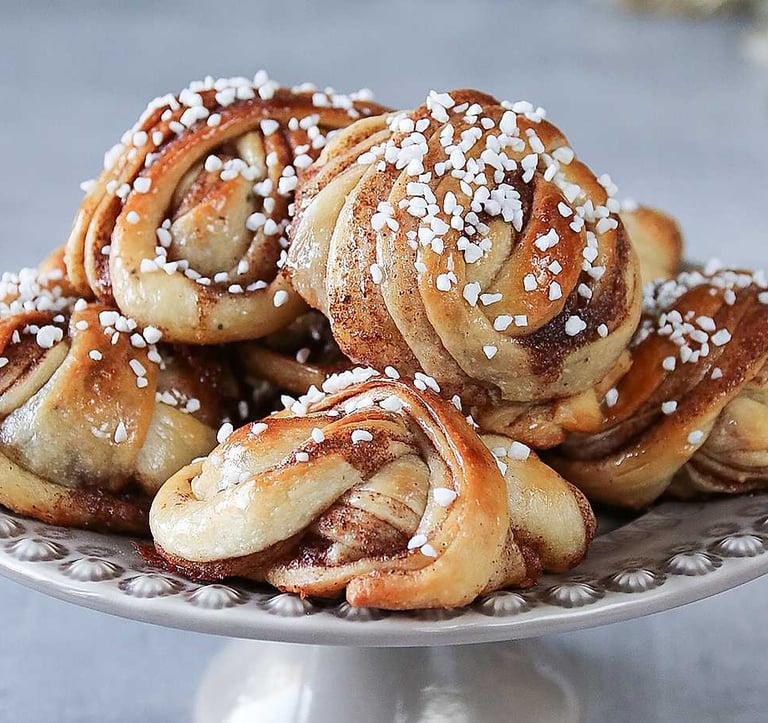
KANELBULLE
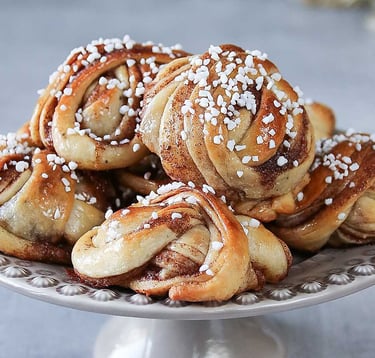
KANELBULLE (cinnamon bun) is one of the most beloved pastries in Sweden and an essential part of the country’s baking and café culture. Made from yeast dough flavored with butter, sugar, and cinnamon, the kanelbulle (cinnamon bun) is typically shaped into spirals or knots and sprinkled with pearl sugar before baking. Its warm aroma and sweet flavor have made it a staple of fika (coffee break), Sweden’s well-known social coffee tradition.
The history of the kanelbulle dates back to the early 20th century. Cinnamon became more widely available in Sweden after World War I, and bakers began experimenting with sweet, spiced breads. By the 1950s, the kanelbulle was firmly established as a household pastry, baked both at home and sold in cafés. Its affordability and comforting taste helped it gain widespread popularity, and it has remained central to Swedish baking ever since.
A unique feature of the kanelbulle is the variety of shapes it can take. While the classic spiral form is common, another popular version is the kardemummabulle (cardamom bun), flavored with cardamom instead of cinnamon, and the twisted snäckor (snails), which emphasize the dough’s layered structure. These variations highlight the creativity of Swedish bakers and the importance of spice-based pastries in national cuisine.
The cultural importance of the kanelbulle is reflected in Kanelbullens dag (Cinnamon Bun Day), celebrated annually on October 4 since 1999. On this day, bakeries, supermarkets, and households across Sweden prepare and consume large quantities of kanelbullar (cinnamon buns), reinforcing its status as a symbol of Swedish food culture. The celebration also emphasizes tradition, encouraging baking at home and reminding Swedes of the pastry’s role in everyday life.
From a social perspective, the kanelbulle is inseparable from fika (coffee break). Having coffee with friends, family, or colleagues almost always includes pastries, and the kanelbulle is the most common choice. This association reinforces the bun’s role not just as food but as part of a broader cultural ritual centered on connection and relaxation.
Internationally, the kanelbulle has become one of Sweden’s most famous baked goods. While many countries have their own versions of cinnamon rolls, the Swedish kanelbulle is distinguished by its use of cardamom in the dough, its lighter texture, and the pearl sugar topping. Exported through IKEA cafés and Swedish bakeries abroad, it has become a culinary ambassador for Sweden.
KRÄFTSKIVA
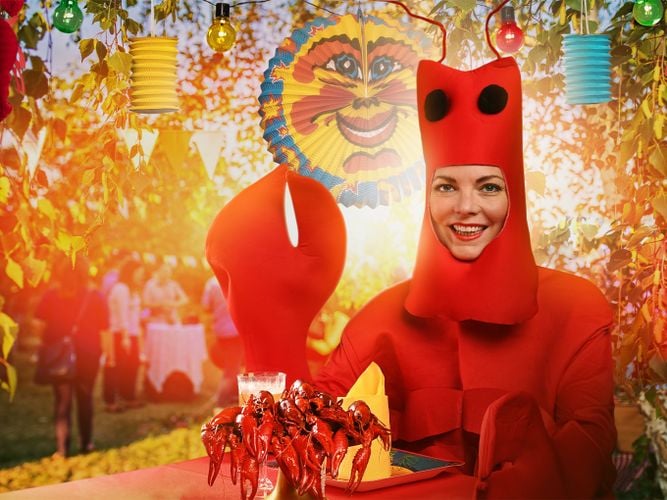
KRÄFTSKIVA (crayfish party) is one of Sweden’s most distinctive annual celebrations, held during August when crayfish are in season. The tradition of kräftskiva combines food, drink, and festivity, making it both a culinary and cultural event that reflects Swedish social life. Participants gather to eat boiled crayfish flavored with dill, drink snaps (schnapps), and sing traditional snapsvisor (drinking songs), often late into the night.
The origins of kräftskiva date back to the 16th century, when crayfish began to be consumed by the Swedish aristocracy. By the 19th century, crayfish had become more widely available, though restrictions were placed on when they could be harvested to prevent overfishing. This led to the custom of eating them only in August, a rule that eventually gave rise to the annual crayfish season. Over time, the celebration evolved from an elite custom into a nationwide tradition embraced by all social classes.
A typical kräftskiva is as much about atmosphere as it is about food. Guests wear paper hats, bibs, and sometimes carry lanterns decorated with images of the moon, creating a playful and informal environment. The crayfish, usually served cold, are eaten with the hands, which makes the meal messy but fun. Alongside crayfish, other foods such as bread, cheese, and pies are often served to complement the meal. The drinking of snaps (schnapps) is a key part of the event, punctuated by group singing and toasts that reinforce the sense of togetherness.
The cultural importance of kräftskiva lies in its role as a marker of late summer. It symbolizes the end of the holiday season and the approach of autumn, making it both festive and nostalgic. For many Swedes, attending at least one kräftskiva each year is a cherished tradition that brings family and friends together. Companies, schools, and associations also organize their own versions, demonstrating the event’s broad social reach.
Internationally, kräftskiva is often highlighted as a uniquely Swedish custom, especially in tourism and cultural promotion. It showcases Swedish food culture, seasonal traditions, and the importance of communal celebrations. Some neighboring countries, such as Finland, have similar traditions, but the Swedish version is particularly elaborate with its decorations, songs, and rituals.
In modern times, crayfish are often imported due to high demand, but the essence of kräftskiva remains unchanged. It is a celebration that blends food, music, and social bonds, embodying Sweden’s values of community and festivity. For Swedes, the kräftskiva is not just a meal but a cultural event that marks a special time of the year.


LILL-LÖRDAG
LILL-LÖRDAG (little Saturday) is a uniquely Swedish tradition that refers to celebrating on Wednesday as if it were a smaller version of the weekend. The idea originated in earlier centuries when domestic workers and maids, who often worked through Saturdays and Sundays, were given Wednesday evenings off. This midweek break became associated with leisure, dancing, and social gatherings, and over time it developed into a cultural habit that continues today.
In modern Sweden, lill-lördag is most often observed by going out to bars, restaurants, or nightclubs on Wednesday nights. Many venues across the country promote special offers or events on this day, knowing that Swedes enjoy breaking up the week with a taste of weekend festivity. While it may not be celebrated by everyone, students and young professionals in particular have kept the tradition alive, making Wednesday a popular night out in Swedish cities.
The cultural significance of lill-lördag lies in its role as a balance between work and leisure. It reflects the Swedish appreciation for structured routines while also allowing space for relaxation and enjoyment. Much like fika, it shows how Swedes value scheduled breaks in daily life, reinforcing social ties and maintaining well-being. For many, it offers motivation during the workweek, providing something to look forward to before the actual weekend arrives.
Although strongly associated with nightlife, lill-lördag is not limited to going out. Families and individuals may also mark the day at home by cooking a nicer dinner, opening a bottle of wine, or simply enjoying a slower pace than on other weekdays. This flexibility demonstrates how the tradition has adapted to modern lifestyles while keeping its original purpose of creating a midweek respite.
Internationally, the concept of lill-lördag is relatively unknown, making it one of Sweden’s more distinctive cultural practices. It highlights Sweden’s approach to balancing work, leisure, and social life, showing how cultural habits can emerge from historical circumstances and continue to shape everyday life centuries later.


LUCIA
LUCIA (Saint Lucy’s Day) is one of Sweden’s most important cultural celebrations, observed on December 13 each year. The tradition combines Christian and older Nordic elements, marking the triumph of light over darkness during the long Swedish winter. Lucia is symbolized by a young girl dressed in a white gown with a red sash, wearing a crown of candles on her head. She is often accompanied by attendants known as tärnor (maidens), stjärngossar (star boys), and children dressed as tomtar (elves or gnomes), creating a procession that sings traditional Luciasånger (Lucia songs).
The origins of Lucia in Sweden date back to medieval times, when the saint from Sicily became venerated in Catholic Europe. The choice of December 13 was significant because, under the old Julian calendar, it marked the winter solstice, the darkest day of the year. Over time, Swedish traditions merged with Christian practices, and Lucia became a symbol of bringing light during the year’s darkest period. The modern form of the celebration took shape in the late 19th and early 20th centuries, eventually spreading nationwide.
The most familiar part of the Lucia tradition is the procession. At schools, workplaces, and public venues, a girl chosen as Lucia leads the group, singing songs such as “Sankta Lucia.” The candles she wears, originally real flames but now often electric for safety, represent the light of hope. Accompanying foods, especially lussekatter (saffron buns) and pepparkakor (gingerbread cookies), are served with coffee or glögg (mulled wine), making the celebration a multisensory experience that blends song, food, and ritual.
Nationally, the Lucia celebration is broadcast on television each year, with a ceremony often held in churches, cathedrals, and cultural centers. Competitions to choose the official Lucia of towns or regions are common, although the tradition has shifted in recent years to emphasize inclusivity, allowing children of any gender to participate. This shows how the custom continues to adapt to modern Swedish values while retaining its symbolic meaning.
For Swedes, Lucia carries deep emotional significance. It represents warmth, light, and community during the darkest part of the year. The combination of music, ritual, and food creates a sense of continuity that unites generations. Families celebrate at home, while schools and communities organize public events, ensuring the tradition is experienced by nearly everyone.
Internationally, Lucia has become one of the most recognized Swedish customs. Swedish communities abroad, especially in the United States and other Nordic countries, celebrate with processions and songs, helping preserve cultural identity outside Sweden.
MIDSOMMAR
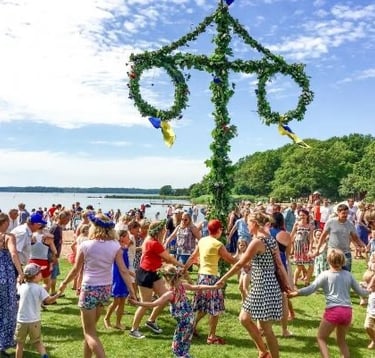
MIDSOMMAR (Midsummer) is one of the most important and widely celebrated holidays in Sweden, marking the summer solstice and the longest days of the year. It usually takes place on the Friday and Saturday between June 20 and 26, and it is second only to Christmas in cultural significance. The celebration of midsommar is deeply rooted in pre-Christian fertility rituals and seasonal traditions, symbolizing light, growth, and the bounty of nature during the peak of summer.
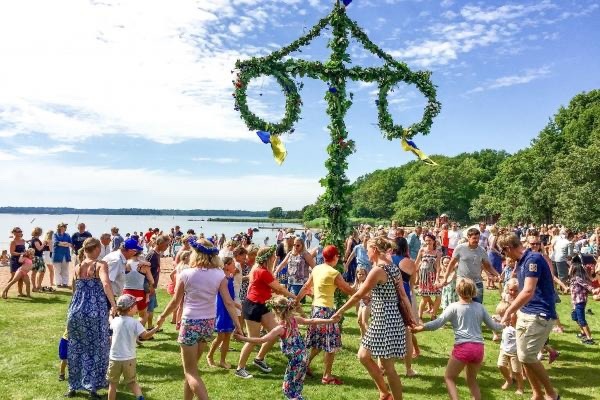
A central feature of midsommar is the raising and dancing around the midsommarstång (maypole), which is decorated with leaves and flowers. Communities gather to perform traditional dances and songs, often accompanied by live folk music. Children and adults alike participate, wearing flower crowns known as midsommarkransar, which are handmade from freshly picked wildflowers. The maypole dance has become an iconic image of Swedish culture, representing joy, community, and a strong connection to seasonal cycles.
Food is a major part of the celebration. A typical midsommar meal includes sill (pickled herring) in various flavors, gräddfil (sour cream) with chives, färskpotatis (new potatoes) with dill, knäckebröd (crispbread), and often grilled meat or fish. For dessert, fresh jordgubbar (strawberries) with cream are traditional, as strawberries are in peak season during this time. Accompanying the meal are snaps (flavored schnapps), often consumed with snapsvisor (drinking songs), adding a festive and communal atmosphere to the feast.
The cultural significance of midsommar goes beyond food and dance. It represents a time for families and friends to gather, often in the countryside or at summer cottages known as sommarstugor. Bonfires, games, and outdoor activities are also common, making it a holiday that emphasizes both tradition and leisure. For many Swedes, midsommar marks the beginning of the summer holiday season, when schools close and workers take vacation, highlighting the balance between work and rest that characterizes Swedish life.
Folklore and superstition also play a role in midsommar traditions. One of the most well-known customs is for young people to pick seven different flowers and place them under their pillow on midsommarnatten (Midsummer night), with the belief that they will dream of their future spouse. Other rituals once connected with fertility and harvest remain part of the cultural memory, showing the holiday’s deep historical roots.
Internationally, midsommar has become one of Sweden’s most recognizable cultural exports. Images of maypole dancing, flower crowns, and festive meals often feature in tourism campaigns and media portrayals of Swedish life. Swedish communities abroad also celebrate the holiday, keeping the tradition alive outside the country.
The enduring importance of midsommar lies in its ability to blend ancient customs with modern celebration. It is both a national festival and a deeply personal experience, marking the height of summer with light, community, and tradition.
NOBELPRIS
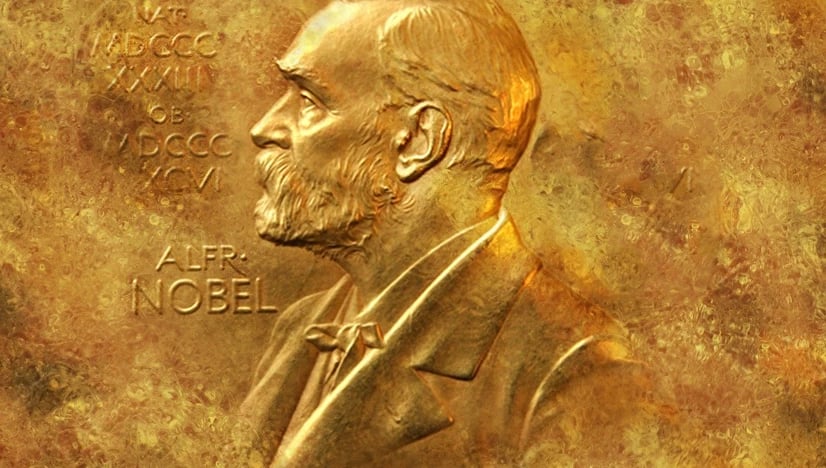
NOBELPRIS (Nobel Prize) is one of the most prestigious international awards, established by the Swedish industrialist and inventor Alfred Nobel. In his will of 1895, Nobel directed that the bulk of his fortune be used to fund prizes recognizing outstanding contributions in physics, chemistry, physiology or medicine, literature, and peace. The first awards were presented in 1901, and since then the Nobelpris has become a symbol of excellence, innovation, and humanitarian achievement worldwide.
The administration of the Nobelpris is divided among several Swedish and Norwegian institutions, reflecting Nobel’s instructions. The Kungliga Vetenskapsakademien (Royal Swedish Academy of Sciences) awards the prizes in physics and chemistry, the Karolinska Institutet awards the prize in physiology or medicine, and the Svenska Akademien (Swedish Academy) awards the prize in literature. The peace prize is awarded by the Norwegian Nobel Committee in Oslo, honoring Nobel’s vision of fostering international harmony. In 1968, the Sveriges Riksbank established the Sveriges Riksbanks pris i ekonomisk vetenskap till Alfred Nobels minne (Prize in Economic Sciences in Memory of Alfred Nobel), which is also presented in Stockholm, though it was not part of Nobel’s original will.
The ceremonies associated with the Nobelpris are major cultural events in Sweden. Each year on December 10, the anniversary of Alfred Nobel’s death, laureates receive their awards in Stockholm from the King of Sweden. The ceremony is followed by the Nobelbanketten (Nobel Banquet) at Stockholm City Hall, a lavish event attended by members of the royal family, government officials, academics, and international guests. The banquet’s elaborate menu, decorations, and musical performances make it one of the highlights of Sweden’s cultural calendar.
Culturally, the Nobelpris has elevated Sweden’s global reputation as a nation committed to science, literature, and peace. The awards reflect values of intellectual achievement, innovation, and humanitarianism that align closely with Sweden’s national identity. Institutions like the Nobelmuseet (Nobel Museum) in Stockholm preserve the history of the prizes and educate the public about laureates’ contributions, ensuring that the legacy of Alfred Nobel continues to inspire future generations.
The influence of the Nobelpris extends far beyond Sweden. It has shaped the careers of some of the most important figures in modern history, from Albert Einstein and Marie Curie to Toni Morrison and Malala Yousafzai. By honoring achievements across diverse fields, the prize promotes progress and dialogue on a global scale.
The significance of the Nobelpris lies in its unique combination of Swedish origin and international impact. While rooted in Stockholm’s institutions and traditions, it serves as a global benchmark for excellence. Through its ceremonies, institutions, and global recognition, the Nobelpris continues to connect Sweden with the highest ideals of human achievement.


EXPAND YOUR KNOWLEDGE
If you are serious about learning Swedish, we recommend that you download the Complete Swedish Master Course.
You will receive all the information available on the website in a convenient portable digital format as well as additional contents: over 15.000 Vocabulary Words and Useful Phrases, in-depth explanations and exercises for all Grammar Rules, exclusive articles with Cultural Insights that you won't find in any other textbook so you can amaze your Swedish friends thanks to your knowledge of their country and history.
With a one-time purchase you will also hours of Podcasts to Practice your Swedish listening skills as well as Dialogues with Exercises to achieve your own Master Certificate.
Start speaking Swedish today!
For requests or suggestions: pr@swedish-institute.org

Learn the official language of Sweden in 30 days thanks to the most complete Grammar, Vocabulary and Culture courses available. Start speaking Swedish today!
© Copyright 2026 Swedish Institute
Come visit Sweden!